The Chalk Stream
Circle of William Pitts (1790-1840) – RARE: Horn Blowing Nymph/Satyr transformed into letter G
Circle of William Pitts (1790-1840) – RARE: Horn Blowing Nymph/Satyr transformed into letter G
Couldn't load pickup availability
Share
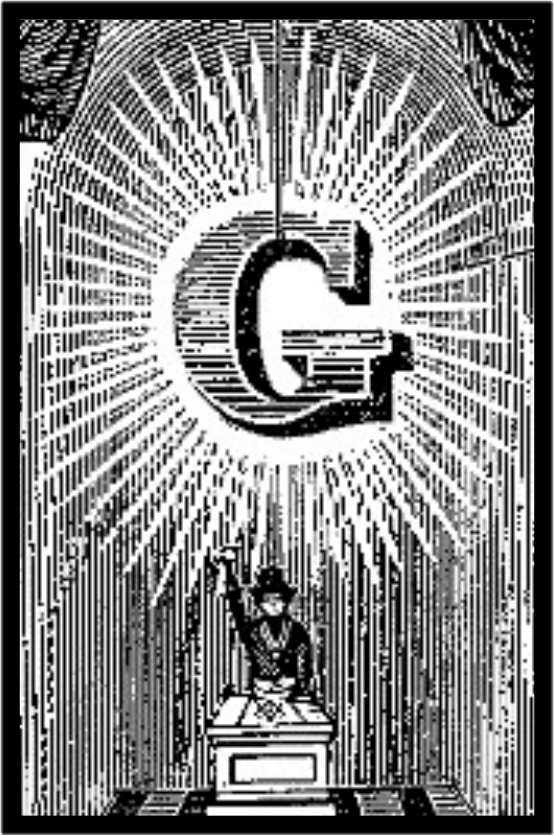
An extremely rare Illuminated letter G, transformed from a Horn Blowing Nymph/Satyr, overlooking a mythical, L-shaped stone tower – by William Pitts (1790-1840).
Unsigned ink on paper, set in the unique frame and mount (style and colour) favoured only by Pitts (code SN30-05415).
William Pitts (1790-1840) was considered England's best engraver and sculptor.
He was commissioned by the Royal Family to provide bas-relief sculptors in the bow-room and drawing-rooms at Buckingham Palace.
He also made drawings to illustrate volumes of Virgil, Horace and Euripides.
Pitts sketched in pen, black ink, black chalk. He commonly featured mythical characters and scenes – especially nyphms, satyrs, helios and other classical figures.
The nymph/satyr, the "G" and other symbols in Pitt's work here, represent Hermetic (and Masonic) themes.
The letter G is one of the most important emblems of the Masonic Craft Lodge. In Hermetic teaching it is a magical symbol, sometimes used in rituals inside a pentacle to represent the five senses. The "G" also represents the God the person seeks. This is done via the 5 senses to access the divine spark that is hidden, but never entirely separated.
Pitts chooses not to identify the horn blower as a nymph or satyr. Although some elements appear feminine (including the G connected to the body as a nymph wing), the arms and torso are male and muscular - suggesting either non gender or hermaphrodite characteristics.
Pitts wraps the horn blower in the "G" representing a co-joining, and the catalytic force of alchemy and enzyme nature.
The backdrop of fruit and foliage represents fertility, birth and renewal.
A serpent coils about the Tree of Life, behind and above the horn blower.
There are many more Hermetic symbols and themes hidden inside the picture. The tower in the distance has several meanings, which are explained in more detail in the free accompanying booklet.
Pitts sets the entire scene within a six sided frame, in keeping with the Hermetic/masonic symbolism of the G, as represented by a right angle square: "on the square".
The clumsy, unbalanced six-sided frame was never used again by Pitts.
It was necessary to achieves 3 "Gs" – the triad or Trinity, as well as a blunted L shape. Ancient Egyptian Try Squares (in L shape) were commonly placed in tombs. These are sometimes referred to as the "The Gallows Square", when turned upside down; or the Gamma – the Greek letter G.
The G can also mean justice.
Pitts committed suicide on 16 April 1840, by overdosing on laudanum at his Pimlico home. He was suffering financial troubles, but it is not know whether the two were connected.
Details
Signed: –
Inscribed: –
Condition: Light diagonal fold to the paper
Presented: Unframed, mounted